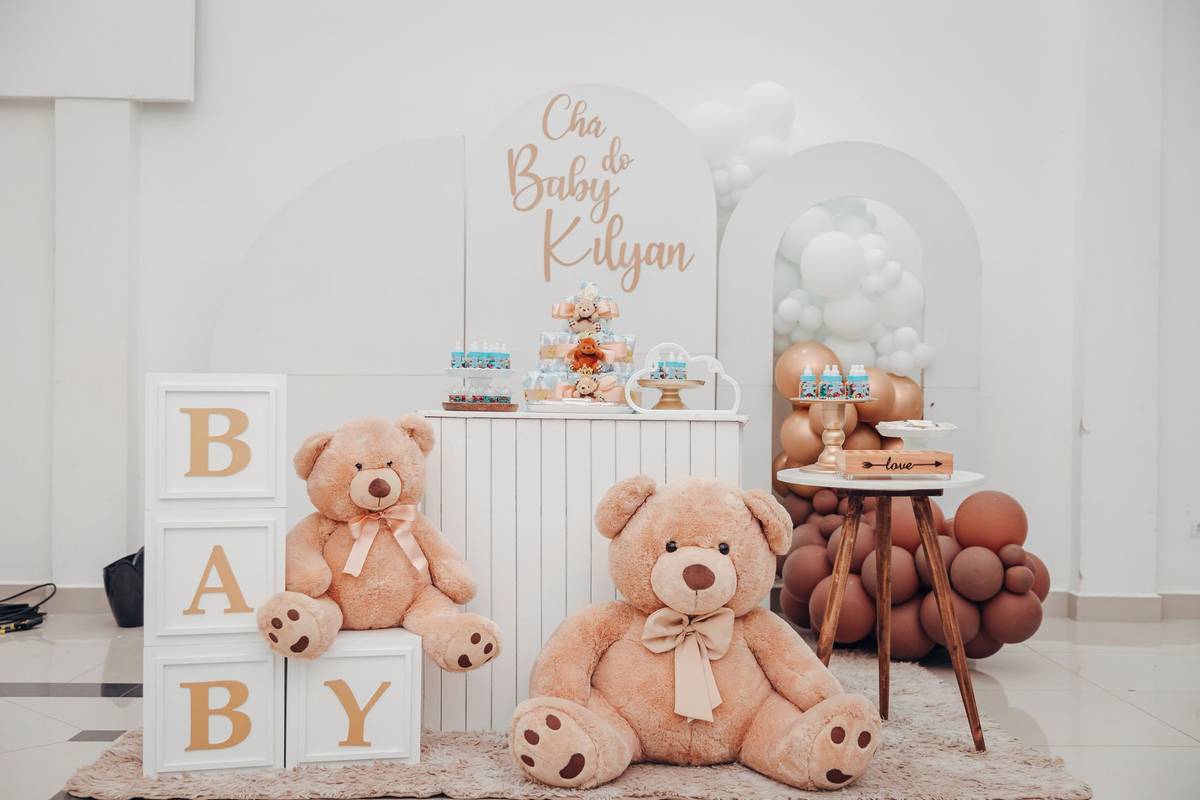
Sending Baby Shower Invitations by WhatsApp
Put attendance first and keep every baby shower RSVP in one place.

Sending baby shower invitations by WhatsApp works best when the message leads to one place for replies. For a simple RSVP form that only asks guests what applies, put attendance first, then show guest count, meal choice and dietary questions only after a Yes, where relevant. The host should have a warm invitation and a guest list they can use without becoming a part-time detective.
Why WhatsApp works as a baby shower invitation channel
WhatsApp reaches guests in a place they already use. For a host whose circle is on the app, there is no new account to create or unfamiliar interface to learn. Its high read rates also give invitations and reminders a better chance of being seen than email, where messages routinely go unread.
The channel now does more than deliver messages. As of November 2026, WhatsApp added cover photos, RSVP tracking and links for non-WhatsApp users to its native Events feature. Guests who do not have the app can reply through an event link without downloading it. WhatsApp’s official blog says the Events Home section, found under Settings and then Events, shows past and upcoming events, both those a person created and those they were invited to.
The invitation can have a visual identity, while responses need not disappear into the chat history. That makes WhatsApp a capable invitation channel rather than a workaround for not sending something on paper. Using that capability well still takes deliberate choices about the details, wording and route guests should use to reply.
What every baby shower WhatsApp message must include
Name the parent-to-be, or both parents for a coed shower, and say that the event is a baby shower. The word “shower” does useful work because it signals the kind of celebration and its usual gift expectations without a blunt request. If gifts are not expected, state that clearly.
Next, give the date, start time and end time. For an in-person shower, include the venue name and full address. For a virtual event, name the platform and explain how guests will receive the join link. Add the host’s name and contact information, followed by an RSVP deadline and one clear response method. Guests should not have to choose between replying, calling and sending a message to someone else.
Finish with any theme, dress code or special instructions that guests need to get ready. Keep registry information on the invitation page or in the RSVP confirmation rather than making it part of the WhatsApp message itself. A link with a real preview card can catch guests’ eyes before they read the text that comes with it. Gather these details before writing the greeting. The wording goes much faster when the logistics are already settled.
How to word the message for different types of baby shower
A traditional shower calls for warmth. Lead with the occasion and the parent’s name, move into the practical details, then close with the RSVP instruction. A compact structure is “Baby shower honoring [Name]. [Date], [start and end time], [location and full address]. RSVP to [Host] by [date].” The welcome can be affectionate without making guests excavate the address from a paragraph about tiny toes.
For a coed shower, put both parents in the frame. “Baby shower honoring the parents-to-be” makes the focus clear, followed by both names and the same practical details. Naming only one parent while intending to celebrate both leaves the invitation doing two different jobs badly. Inclusive wording is simpler than a later explanation of who the celebration is for.
For a gender-neutral shower, focus on the baby and parent. “Baby [Last Name] is arriving soon” provides a straightforward opening. The supplied phrase “a new little human is on the way” offers a more playful version without defaulting to pink or blue. Either can lead directly into the occasion, details and reply instruction.
Name it as a sprinkle and describe it as a little celebration. If the parents enjoy humor, “Sleep is about to become optional” can open a playful invitation before the practical details take over. The joke should fit their sensibility.
A workplace shower needs a different kind of warmth. Keep participation clearly optional, name the time and place, and say that gifts are not expected. “Drop in if you can” respects colleagues who are traveling, on deadline or simply not close to the parent-to-be. Give them a one-tap way to reply.
Wording a virtual baby shower invitation for WhatsApp
A virtual invitation tells people where to click. Put “virtual” or “online” in the first line, then explicitly name Zoom, Google Meet, FaceTime or WhatsApp video, whichever the shower uses. Guests should know the platform before the event. Also give a clear end time, because a video celebration needs a visible exit.
If any guest is out of state, show the start time in at least two time zones. Put the host’s zone first and add up to two others where useful. Beyond that, the invitation starts looking like a train timetable. Showing a few relevant time zones removes mental arithmetic.
Keep the join link off the invitation itself. Explain that it will arrive in the RSVP confirmation, so guests know both how to respond and what happens next. Invitations get forwarded, and a video room without a waiting room or other security controls can admit anyone holding its URL. Sending the link after a reply also gives the host a practical reason to follow up with guests who have not answered. Resend it on the morning of the shower to reduce last-minute searches.
Use a structure such as “Virtual baby shower for [Name]. [Date], [start time and time zones], ending at [time]. Google Meet. Reply by [date] to receive the join link.” For gifts, replace “optional but appreciated” with one clear position. Put registry and direct-shipping details on the invitation page or confirmation, or say “no gifts needed” and mean it.
Wording a surprise baby shower invitation on WhatsApp
“Shhh — it’s a surprise!” should appear before the parent’s name and the shower details, so nobody mistakes the message for something safe to forward. Route every RSVP to the organizer, never to the parent-to-be. The invitation needs to make that boundary obvious, especially when guests would normally contact the guest of honor directly.
Keep the group that plans the shower small until the details are settled. Use a dedicated group chat or broadcast list that the guest of honor cannot access, and assign one person to handle leaks or last-minute panics. Within the last day, remind guests when to arrive, where to park and to silence their phones before they come in. A surprise works better without a notification announcing the ambush. It also makes reliable RSVPs especially important, because the organizer is the only person who can see the whole plan.
Collecting RSVPs through WhatsApp without chasing scattered replies
An open-ended “who’s coming?” produces conversation. One guest says yes, another mentions the family, and another asks whether the event is formal. A fourth wants the time again. The host then has to separate attendance from questions, establish headcounts and reconcile everything manually. An open group chat adds another problem by exposing guests’ phone numbers while burying the invitation under later messages.
To use a form, send each guest their own short message with a link to one RSVP form. Keep replies in one guest list so they are all together instead of spread across chat threads. The basic fields ask for a full name, whether the guest is coming and, if they are, a guest count that includes plus-ones. Meal preference and dietary restrictions belong only where they apply to the shower. A simple gathering should not require an application dossier.
For a form that only shows relevant questions, attendance is the branching point. Ask whether the guest is coming, then ask how many people are coming after Yes. If guests have a meal choice, ask that question on the same Yes path, along with dietary restrictions if they apply. A No response should not lead into dinner selections. This is the concrete conditional-logic requirement to look for in a form tool, rather than judging it only by how attractive its templates are.
WhatsApp’s native Events feature is another option when the host only needs to track who is coming. Guests can indicate going, might attend or cannot attend in the app or through a browser link. Non-WhatsApp guests submitting a response are asked for their name, country and mobile number. Responses appear together in Events Home. That is useful for a straightforward headcount, while a conditional form addresses the separate need to ask attending guests relevant follow-up questions.
Whichever route the invitation uses, keep reminders tied to missing answers. Send a single follow-up to people who have not replied. The distinction is important for a surprise shower too, where questions and changes must stay with the organizer.
Timing, delivery method, and a few etiquette calls that affect whether guests actually respond
For a casual gathering, sending invitations one to two weeks ahead is usually sufficient. For a dinner requiring a reservation, or a larger event that needs space in guests’ schedules, allow three to four weeks. The planning burden sets the lead time. A short message cannot compensate for an invitation that arrives after everyone has made other plans.
Send invitations to each guest on their own or through a broadcast list, keeping them out of an open group chat. A broadcast list delivers messages individually and brings replies into private conversations with the host. This keeps the guest list private. If a form is collecting RSVPs, make its link the clear reply route so those private chats do not become a second attendance ledger.
State “no gifts,” books instead of cards or a diaper raffle clearly and simply, while keeping registry details on the invitation page. Ambiguity passes the awkward decision to the guest.
Say whether kids are welcome or the shower is adults-only, rather than expecting guests to infer it from the tone. For a private home, include the full address so guests can use navigation apps. These are small details with practical consequences.
Keeping invitations, RSVPs, and the guest list in one place instead of scattered across chats
The coordination work begins after the invitation leaves the host’s phone. Someone has to distinguish replies from questions, follow up with nonresponders and manage arrivals on the day. When WhatsApp serves only as a messaging channel, that work can spill into a separate spreadsheet and repeated searches through chat threads. The invitation may be simple while the process behind it becomes anything but.
Native Events reduces that friction by collecting responses in one view. It works best for smaller, casual gatherings where the host does not need ticketing, a dedicated event page or door check-in. A conditional RSVP form serves a different purpose when guest count, meal choice or dietary details need to depend on attendance.
For a shower with a ticketed element, a contribution model or a larger guest list, connect WhatsApp delivery to a purpose-built RSVP and check-in system. Invitations can go through WhatsApp, email or text, whichever suits the guests, and all replies go into one guest list. On the day, arrivals can be checked in from a phone without a paper list. The channel stays familiar, but the coordination has a home. That leaves the host free to welcome people instead of scrolling for proof that someone said yes.