Christening Invitation Wording and Church Details
Confirm the church slot first, then word, time, and RSVP follow.
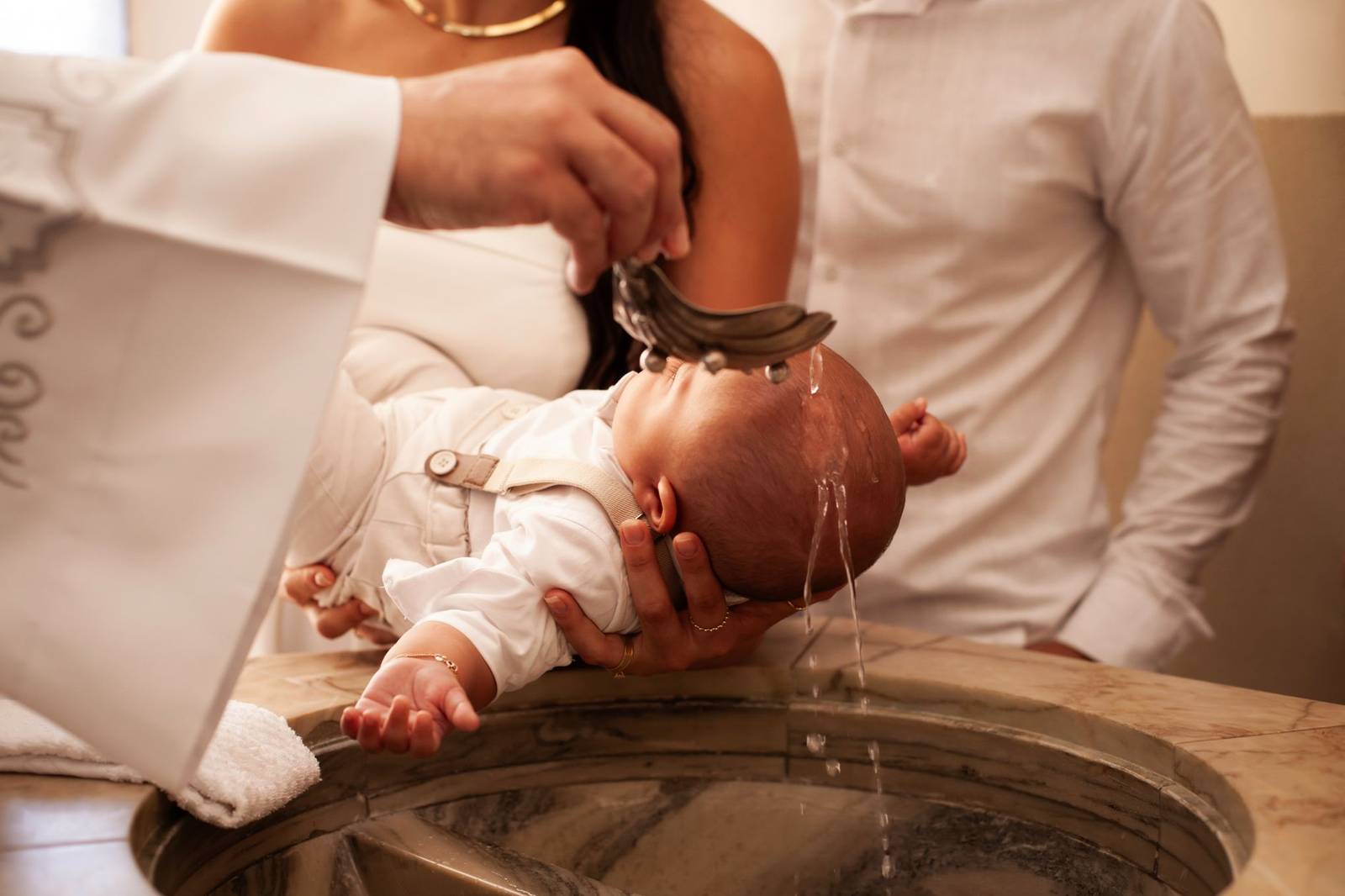
A christening invitation works when the ceremony slot is confirmed first, the wording matches the tradition, and guests know when to arrive and how to reply. For a simple RSVP form that only asks guests what applies, ask attendance first and show meal questions only to guests who say yes.
Why the confirmed church slot must come before every other decision
The church, chapel, or officiant sets the ceremony time. Until that slot is agreed, the reception booking, the date to send invitations, and the RSVP deadline could all change. Vowly’s christening guide puts the conversation with the ceremony venue first because only the people leading the service can say what it involves.
Come away with the date, start time, ceremony length, and number of guests the space holds. Ask whether the baptism shares a slot with other families or takes place within an existing service, and whether paperwork or a meeting is required beforehand. Check the rules for photography. Check what godparents, sponsors, or witnesses are expected to do too. Two buildings in the same town may give different answers, so an invitation sent before those answers are agreed may need to be corrected.
The difference between "christening" and "baptism" and why the word on the invitation matters
Use the officiant’s words for the ceremony on the invitation. If the church calls the ceremony a baptism, use “baptism” rather than choosing “christening” because it fits the lettering better. The word signals what guests are being invited to attend.
BaptiDay’s wording guide identifies “naming ceremony,” “welcome ceremony,” and “civil baptism” as frames for non-religious celebrations. For a secular event, use “naming ceremony” or “celebration” rather than borrowing religious language, unless “civil baptism” is the ceremony’s actual name. For an interfaith day with two distinct events, name both. For a church blessing followed by a naming ceremony, one name would leave out part of the day.
What every christening invitation must include
Once the slot and the name of the ceremony are agreed, start the invitation with the child’s name and the parents’ names. Add the ceremony date and time, the church or venue name, and its full address. Then give the reception location and time, followed by the RSVP deadline and contact method. Keep the two venues clearly separated on the finished card.
For a combined invitation, state whether the recipient is invited to both parts of the day or only the reception. A dress code or colour theme can follow if one applies, while a scripture verse or godparents’ names can add meaning without replacing practical information. The arrival instruction, however, is not decorative. Occavia identifies late arrival as the most common christening guest mishap, so use an explicit line such as “The service begins at 11:00, please be seated by 10:45.”
The other easily missed detail is a welcome for guests of different faiths or none. Some may worry that attending the service would be intrusive and quietly decide to come only to the reception. Remove that uncertainty with a direct sentence. “The service is open to everyone, whatever you believe, and nothing is expected of you” explains the welcome without assuming guests know church customs.
Wording by register: formal, warm, Catholic, Anglican, civil, and interfaith
The practical test is whether each phrase helps invite, explain, or welcome. Formal does not have to mean upholstered in adjectives. Use the wording below and add the full address, arrival note, and reply details where needed.
For a Catholic baptism, opening with words of faith fits the sacrament being celebrated. BaptiDay gives this model. “Through the waters of baptism, we welcome our daughter [Full Name] into God's family. You are warmly invited to her baptism. Saturday, [Date] at [Time], [Church Name, Address]. Reception to follow at [Venue]. RSVP by [Date] to [Phone/Email]. [Parents' Names].” For a scripture-led opening instead, “Let the little children come to me.” (Matthew 19:14) can precede the parents’ invitation line.
For an Anglican christening, a warm invitation from the parents can sound traditional and still feel natural. The same guide offers this UK wording. “[Parents' Names] warmly invite you to the christening of [Full Name] on [Date] at [Time], [Church Name, City], United Kingdom. Refreshments will follow at [Venue]. RSVP by [Date].” Complete the location with the full address and add a reply method. A city name alone is not a destination.
For a small gathering or a personal digital invitation, conversational wording can fit better. Occavia offers this version. “Our little [Name] is being baptized, and we'd love you by our side. Sunday, May 17, 2026 at 11:30 a.m. [Church], followed by lunch at [venue]. Please let us know you're coming!” Read it aloud to test the tone, then replace the sample date and time and add the missing practical details, including a reply deadline.
If the ceremony is formally called a civil baptism, use that term and leave out religious imagery. BaptiDay provides this model. “[Parents' Names] invite you to the civil baptism of their child [Full Name] celebrated by the [City Hall] of [Town] on [Date] at [Time]. Reception to follow at [Venue].” For a secular naming day, use “naming ceremony” or “celebration” instead. The ceremony’s own name does the work.
For an interfaith or dual-tradition day, separate event names make the welcome clear to both sides of the family. A usable model is “Blessing at [Church] at noon, naming ceremony and garden party at [Address] from 2 pm. Sunday, June 20. Reply by June 11.” Replace the details in the example with what has been agreed. If children are welcome at the reception, “little ones welcome” also removes a common uncertainty.
For a brief text or email follow-up, the wording can shrink once guests already have the context. BaptiDay suggests “[Baby]'s baptism · [Date] · [Venue] · 11 AM. Reception after. RSVP [Phone].” This suits a follow-up after a save-the-date rather than the first invitation to a formal ceremony.
Godparents on the invitation: how to include them without displacing the child
Naming godparents is an honour. BaptiDay notes that their inclusion is more common in traditional Catholic and Orthodox communities, while modern minimalist invitations often omit them. Neither choice breaks an etiquette rule. The child should remain the clear focus, with any godparents’ line near the bottom and visually secondary to the child’s name.
Before printing, confirm every spelling and decide whether one couple or several sets will be named. A warmer option is “We're grateful to [Godparents' names], who will stand beside [Name] on this day and beyond.” Keep that acknowledgement separate from the main invitation. The person leading the ceremony can explain whether godparents, sponsors, or witnesses must be named because of their role or whether the family can choose to name them.
RSVP wording, deadlines, and what to collect when guests reply
An RSVP line turns the guest list into information the church and caterer can use. BaptiDay recommends a reply deadline at least fourteen days before the ceremony, with printed invitations sent four to six weeks ahead and digital invitations three to five weeks ahead. Allow more time for destination baptisms, major holiday weekends, guests from out of town, and plans that need to fit the church calendar. Set the deadline before choosing the wording.
For a formal reply request, Optimalprint’s christening guide offers “Kindly RSVP by [Date]. Your presence will be our blessing.” Add the contact method so the sentiment has somewhere to go. “Regrets only by [date]” suits very small, close-family gatherings. Where church seating is limited, say “limited seating at the church” and make clear whether the reception welcomes a wider circle.
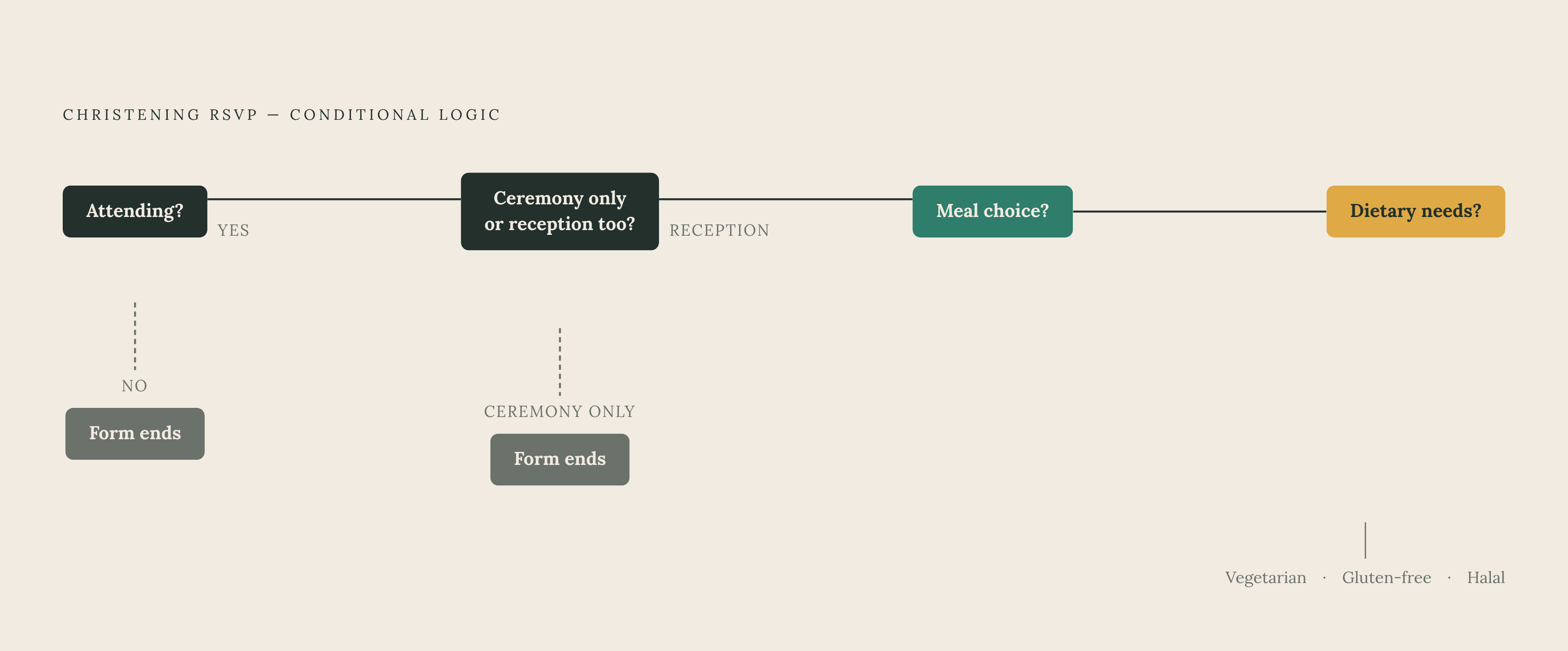
For an online form, ask attendance first and reveal follow-up questions only when the answers make them relevant. Meal choice should appear only after a yes. For a two-part event, relevance also depends on whether the guest will attend the reception. Someone attending only the ceremony does not need to choose lunch. Collect meal choices and allergens at reply time so vegetarian, gluten-free, and halal requirements are known before numbers go to the caterer.
For a larger gathering, an online RSVP page can bring headcount, meal choices, and dietary requirements into one place rather than leaving the host to chase replies by phone. The useful selection criterion is conditional logic that supports the actual questions needed. The supplied guidance does not establish which named tool provides that behaviour, so there is no grounded basis here for ranking one above another.
Envelope addressing, envelope wording, and the announcement versus invitation distinction
For formal invitations, the envelope gives guests a first impression before they open the card. BaptiDay recommends stamped, hand-addressed envelopes for the warmest impression. Even with the envelope, the invitation still needs to say clearly who is invited and give the venue’s address.
An invitation uses future tense and asks the recipient to attend, as in “We invite you to the baptism…” An announcement shares the news without asking for attendance. It suits a private ceremony, distant family who cannot attend, or a family sending word after the event. Choose according to what the recipient is being asked to do.
Printed, digital, or hybrid: choosing the format and managing replies
Printed invitations remain conventional for Catholic and Orthodox baptisms, particularly when grandparents and elders are central to the guest list. They also serve as keepsakes. Digital invitations suit easy sharing, while messaging-app-formatted designs fit close family and informal guest lists.
A hybrid approach is the most common resolution, with printed cards for elders and digital invitations for everyone else. A QR code on the printed card can link to a personalised event page containing the schedule, map, photos, and RSVP form.
For hosts considering an event-page service, the relevant question is whether it combines the page and reply workflow they need. Vowly’s guide recommends planning the ceremony first, but the guide alone does not show that a product has a given feature. Assess the QR-code-to-RSVP workflow and conditional questions as separate requirements.
Church logistics that must appear on or alongside the invitation
Before sending, go back over what the church said and check what guests still need to know. Put the seated-by time on the invitation. Use an information card or event page for longer directions. Explain any shared ceremony slot so guests do not mistake another family’s service for theirs. Add parking or transport notes where the church is in a town centre or space is limited. Ask the venue about step-free access to the main space before telling guests how accessible it is.
Vowly recommends keeping the time between the ceremony and food short while allowing 20–30 minutes to take photographs, get to cars, and find the reception venue. That allowance is especially useful with babies, toddlers, and older relatives in the group. Make any photography restrictions clear before guests arrive, and include a dress code or colour preference if the church or family has one.
A soft line such as “Your presence is the greatest gift” can appear on the card, while donation links or wish-lists sit on the RSVP page. Then check the finished invitation against the agreed service arrangements. Confirm the slot, complete the guest instructions, and only then press print or send.